Random Rehab = Random Results: What Social Media Doesn't Tell You

If you’ve ever found yourself scrolling through Instagram at 10pm or maybe on your lunch hour at work, saving 47 different mobility drills, promising yourself “tomorrow I will become a new, pain-free human”… you’re not alone.
And look — there’s nothing wrong with a bit of late-night inspiration. But when it comes to actual injury rehab or performance training, relying on random Instagram or YouTube content is a bit like trying to cook a Sunday roast using 12 different recipes from 12 different chefs.

One says salt it. One says don’t. One says slow roast. One says blast it at 220°. By the end of it, nothing matches, nothing works together… and your lamb comes out looking like it’s seen better days.
Rehab and performance are the same. Random inputs lead to random outputs.
Let’s break down why.
Social Media Content Looks Great… But It’s Not Written for You
Influencers (even the well-meaning ones) make content for a global audience — not for your specific injury, training history, age, sport, lifestyle or that one dodgy ankle you rolled playing five-a-side in 2008.
Their goal?
Views. Engagement. “Save this for later.”
I’ve got no problem with it — that’s the game.
But rehab needs context.Your body isn’t a generic template… so your rehab shouldn’t be either.
A 20-year-old athlete with a strength base, good mobility and loads of time available?They might thrive on some of the spicy drills you see online.
But the average 40- or 50-something desk-bound runner, golfer, padel player or weekend lifter?
They need very different starting points.
The Pick-and-Mix Rehab Problem
This is where most people get stuck.
You save 10 videos.
You like the look of 6.
You do 4.
You stick with the 1 that felt nice.
But here’s the thing… that one exercise probably isn’t wrong — it’s just not part of a plan.
It’s like turning up at the gym, picking a random exercise for each machine, doing one set and going home thinking you’ve done a proper workout.
Rehab is a bit like building a house:
foundations →
framework →
walls →
roof →
decorating
Pick-and-mix rehab is basically starting with the painting and hoping the walls build themselves.
What social media often fails to mention is the order things need to happen in for the body to actually change.
Rehab Needs a System, Not a Lucky Dip
At Restore, everything we do follows a simple structure — not because it sounds clever, but because it actually works:

Mobility → Control → Strength → Load Tolerance → Performance
Most Instagram exercises jump straight into the spicy stuff:
deep end-range mobility
circus-trick stability drills
advanced variations meant for elite athletes
or just plain weird exercises designed purely to get attention
Meanwhile, most people actually need:
some basic mobility
a bit of coordination or control
some simple, layered strength
gradually increasing load
sensible progressions
It’s not glamorous. It won’t go viral. But it’s what gets you back running, lifting, playing padel, swinging a golf club or simply getting out of bed without wincing.
The “Feels Better Today” Trap
This is a big one.
You try a stretch or mobility drill from Instagram. It feels good. You think, “that fixed it.”
Then the next day?Your knee/hip/back/shoulder is exactly the same.
Here’s why:
Instant relief ≠ long-term change.
A lot of online drills help because:
they move blood
they calm the nervous system
they temporarily reduce muscle tone
they make things feel looser… for a bit
But they don’t change the underlying strength, capacity, load tolerance, coordination or movement options that actually solve the problem.
It’s the difference between:
wiping the fog off your bathroom mirror vs fixing the extractor fan so it stops steaming up in the first place.
Both useful. Only one fixes the issue.
What Good Rehab Actually Looks Like
No fluff. No theatrics. No “guru energy.” Just a proper, personalised, structured plan.
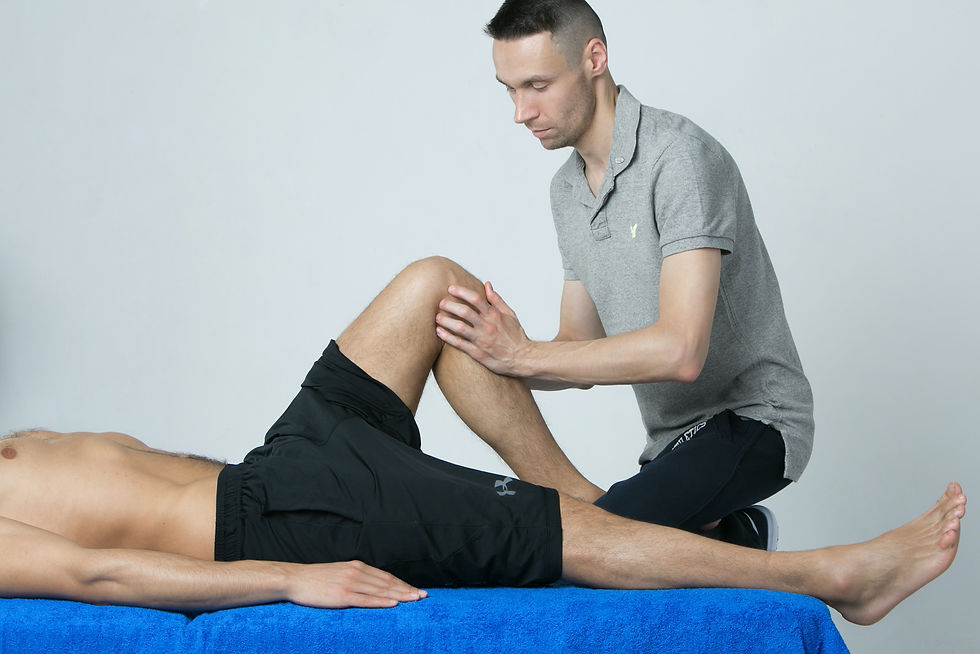
Good rehab:
starts with a proper assessment (in person or online)
identifies the root cause
picks exercises that actually match your needs
gives the right dosage (sets, reps, tempo, frequency)
progresses week by week
adapts based on symptoms
supports your sport/training lifestyle
gives you confidence, not confusion
It should feel:
simple
clear
repeatable
doable on busy weeks
effective, not fancy
And ironically, that’s the kind of content that never goes viral… because it’s too sensible.
When Online Content Can Be Helpful
Just to be clear — I’m not anti-Instagram. There’s some great info out there and it can be a brilliant resource when used properly.
Online content works well for:
warm-ups
general mobility
ideas
symptom relief
technique tips
exercise variations
But these things should sit around your rehab plan… not replace it.
Think of social media content as seasoning. Useful. Tasty. But you still need the actual meal.
If You’re Fed Up Guessing… There’s a Better Way
If your current approach is:
do a bit of this
try a bit of that
see what sticks
wonder why nothing changes
…then you’re not doing anything wrong. You’re just doing what everyone else does.
But your body deserves better than a lucky dip.
If you want a proper assessment and a structured, personalised plan — whether that’s in the clinic or online — just get in touch.
We’ll figure out what actually needs fixing, what needs strengthening and what needs calming down… and we’ll build you a plan that isn’t based on Instagram trends or guesswork.
Your future self (and your knees/hip/back/shoulder/achilles) will thank you for it.


Comments