Injured Before Your Event? 8 Steps to Stay on Track and Keep the Dream Alive

You’ve signed up. You’ve told your family and friends. You’ve been training consistently for weeks… maybe even months.
Then out of nowhere—bang—a niggle, a tweak or something that just doesn’t feel right.
And suddenly you’re stuck in that frustrating middle ground:
“Do I push through… or do I stop and risk losing everything I’ve worked for?”

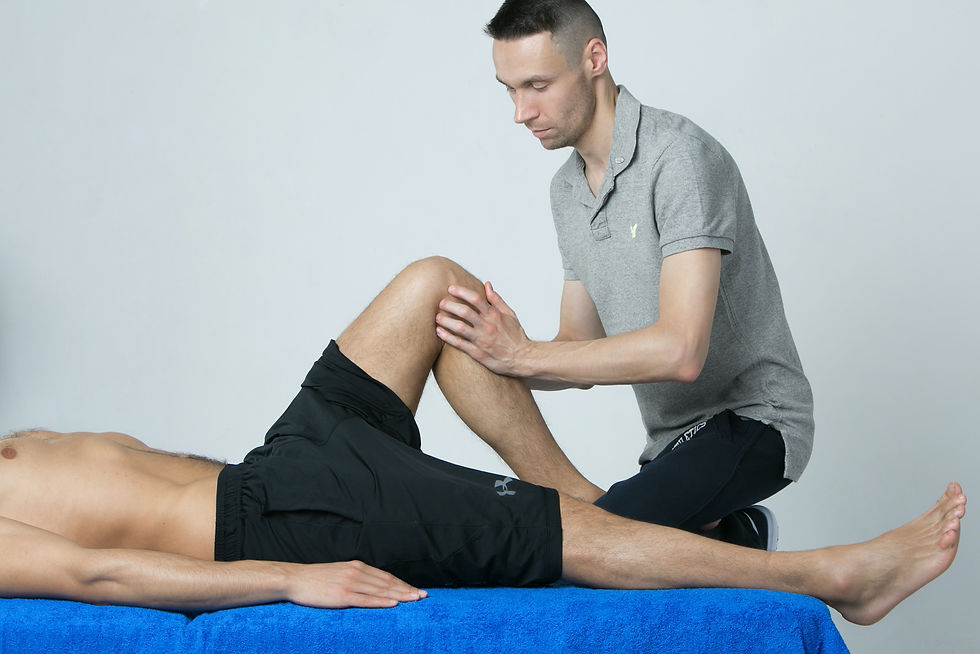
This is something I see all the time in clinic.
Whatever it is, whether it’s a marathon, HYROX, 10k, triathlon, Tough Mudder, perhaps even an important fixture—you’ve got a fixed date. And that changes everything.
Because unlike a fat loss goal or general gym routine, you can’t just “push it back a few weeks.”
So what do you do?
Let’s break it down properly...
Step 1: Understand What You’re Dealing With
Before you panic… you need to be honest about the type of issue you’ve got.
Not all pain is created equal.
1. Niggle (Green-ish light)– Low-level discomfort– Doesn’t worsen as you go– Settles quickly after training
2. Injury (Amber light)– Affects performance– Changes how you move– Needs modifying, not ignoring
3. Stop Sign (Red light)– Sharp pain, swelling, instability– Getting worse each session– This needs proper attention, not bravado
The problem? Most people treat everything like a niggle… and just keep going.
That’s how a small issue becomes the reason you don’t make the start line at all.
More on this coming up...
Step 2: Reframe the Goal (Without Writing It Off)
This is where we need a slight mindset shift—but not in the way most people think.
Getting an injury or niggle doesn’t automatically mean your event is a write-off.
In fact, in some cases… it can actually work in your favour.
Here’s why;
A lot of people heading into events are:
Slightly over-trained
Carrying more fatigue than they realise
Putting huge pressure on themselves to hit a time or target
Then a niggle crops up… and they’re forced to:
Reduce volume
Train a bit smarter
Actually recover properly
And interestingly, that’s often when things start to click.
I’ve seen plenty of people:
Turn up feeling fresher
Race with less pressure
Enjoy the day more
…and come away with a PB anyway.
So What’s the Goal Now?
Instead of going straight to:
“That’s it, I can’t perform now”
We shift it to:
“Let’s give ourselves the best chance of performing on the day”

That might mean:
Adjusting training in the short term
Letting go of rigid expectations
Focusing on feeling good, rather than forcing numbers
Because the reality is: The best performances often come when you’re fresh, confident, and not overthinking it.
Keep the Dream… Just Add a Bit of Flexibility
You don’t need to abandon the goal.
But you do need to be adaptable.
Think of it like this:
Best case → you still go and perform exactly how you hoped
Middle ground → you adjust slightly and still have a great day
Worst case (managed properly) → you still get to the start line in a decent place
That’s a much better outcome than forcing it now and missing the event altogether.
Step 3: Stop Forcing It—Start Adapting
This is where a lot of people fall down.
They think:
“If I can’t train properly, I’m losing fitness”
Not true.
You’re just changing how you prepare.
Instead, ask:
“What can I still do that moves me forward?”

For example:
Knee pain with running → cycle, Ski Erg, double down on strength work
Shoulder issue before HYROX → lower body engine, sleds, carries
Achilles niggle → reduce plyo, add strength & isometrics
Fitness is surprisingly transferable.
You’re not going backwards—you’re just taking a different route.
Step 4: Use a Simple Traffic Light System
This is something I use a lot with clients because it removes the guesswork.
🟢 Green Light Pain ≤ 3/10, settles quickly, no flare-up next day→ Crack on
🟡 Amber Light Pain 4–5/10, noticeable but manageable→ Modify volume or intensity
🔴 Red Light Pain >5/10, sharp, worsening or lingering→ Stop and reassess
This gives you structure… without needing to overthink every session.
Step 5: Accept the Timeline (Even If You Don’t Like It)
Here’s the honest bit…
You don’t negotiate with biology.
If something realistically needs 4–6 weeks to calm down… it doesn’t care that your event is in 3.
That doesn’t mean all hope is lost—but it does mean you need to adjust expectations.
Instead of asking:
“Can I be 100% by race day?”
Ask:
“What’s the best version of me I can bring to that start line?”
That’s a much more productive question.
Step 6: Focus on the Minimum Effective Dose
You don’t need perfect training right now.
You need enough.

This might look like:
2–3 quality sessions per week
Reduced volume, but keeping some intensity
Smart exposure to event-specific movements (scaled if needed)
This is where experience matters.
Most people either do too much… or not enough.
The sweet spot is keeping the engine ticking over without constantly irritating the injury.
Step 7: Treat Rehab Like It’s Part of your Training...Because It Is
This is the game-changer.
Rehab isn’t:
“Something I’ll do if I’ve got time”
It becomes:
“The most important session of my week”
That could include:
Isometrics for pain relief
Strength work to build tolerance
Gradual reloading of the injured area
Skip it… and you’re just guessing.
Do it, and do it properly… and you give yourself every chance.
Step 8: Be Honest—Go, Modify, or Pull Back
At some point, you need to make a call.
There are usually three outcomes:
1. Full Send You recover well → you go for it
2. Modified Completion (most common)You adjust pace, expectations, maybe walk/run or scale certain elements→ but you still get it done
3. Strategic WithdrawalYou pull out early enough to avoid a long-term issue

And this is important…
Pulling out isn’t failure.
Turning a 4-week niggle into a 6-month injury?That’s the real loss.
The Big Takeaway
Injury before an event doesn’t mean it’s over.
But it does mean the plan needs to change.
The people who handle this best aren’t the toughest…
They’re the ones who:
Stay calm
Stay flexible
Stay consistent with what they can do
Not the ones who try to bulldoze through and hope for the best.
Need Help Navigating This?
If you’ve got an event coming up and something’s not quite right, don’t leave it to guesswork.
At Restore Sports Injury, we specialise in helping you:
Stay training around injuries
Build a clear plan towards your event
Give yourself the best chance of getting to that start line feeling ready
Drop me a message or book in for an assessment—let’s keep your goal alive, without making things worse.


Comments